

Do you ever get the call to a certain place? The inner calling that just doesn’t go away until you surrender and visit the place. Recently I was pulled toward this place, The Priory of St Mary and St Michael is commonly known as Cartmel Priory. As we travelled toward village of Cartmel we passed many historical, stone buildings and new modern signs of the times, one of these was a new Starbucks with its familiar logo at the side of the road, but I will come back to that later….
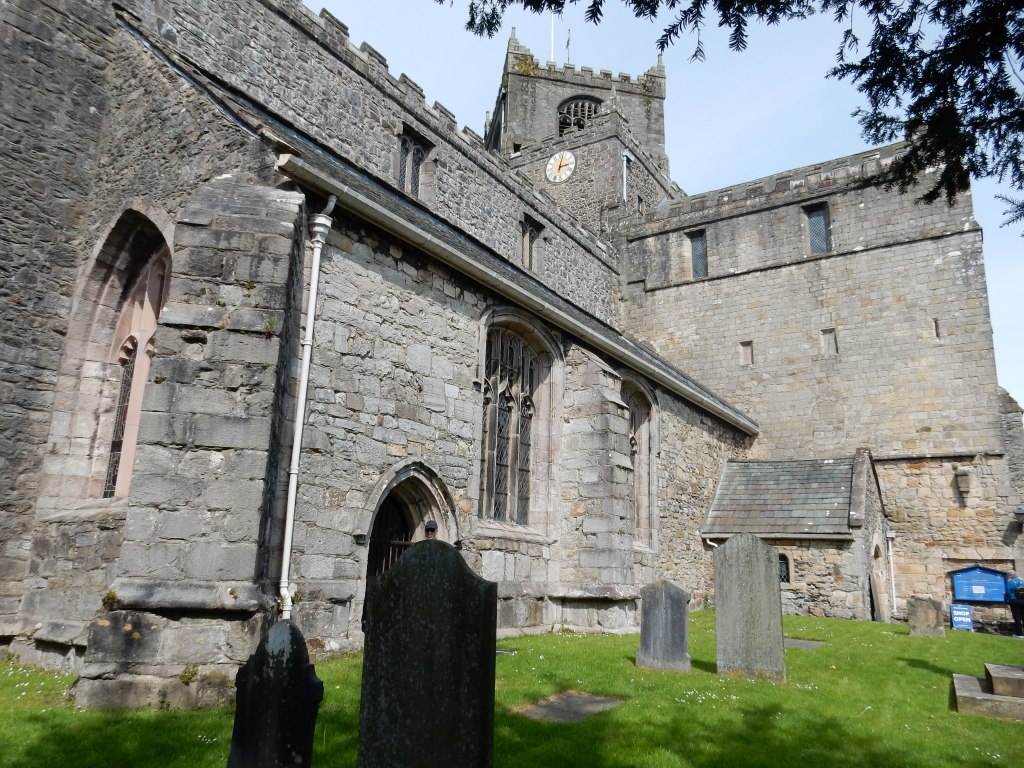
The feel of the Priory is soft, contemplative, and devotional. There is a sense of femininity and a weaving of the Marion energies that seem to create a state of profound gentleness. The other aspect of significance to me was the image of a Goddess in the choir stalls. While the stalls have fabulous symbology with curious carvings throughout, this figure seemed to create a celebration of the feminine nature with more zeal and deliberation.
Medieval Mermaids
The carvings are “hidden in plain sight”, under each seated of the choir stalls, dated to the 15th century. The intricate details of the carvings are not of a Cumbrian landscape of that era. There are lions, palm leaves, faces, plant life and a mermaid, in the 15th century choir stalls. At first I thought the figure of the mermaid was of Yemoja or Mami Wata, with a comb and mirror, also symbolic to Aphrodite. It was a strange curiosity to find this image here in a medieval monastic place of workship! But on a little delving into mermaid history in churches in the British Isles there are other misericords with carvings that are similar at Tewkwsbury, Carlisle and Zennor in Cornwall. But this mermaid has two tails!
In medieval art it is said that a mermaid with two tails is a Melusine. The myth of the Melusine weaves through French, English and Scottish royalty, and as far back as Queen Isabella I of Jerusalem. This is a storyline that was known throughout the ancient worlds at the time of the Crusades. It is a myth that links the Crusaders, to the Royal Houses, and a familiar story of the Merovingian dynasty holding the bloodline from Mary Magdalene.

Is it a coincidence that the founder of Cartmel Priory, is believed to be a Knight’s Templar! I think it is a treasure trove of antiquity curioso, the stuff that good storytelling is made from. So William Marshal, the Knight was known to have escorted Eleanor of Aquitaine when they were ambush. William fought for her safety and was captured himself. Eleanor survived and paid ransom for William Marshal’s release. His career in the royal court ascended from this moment. So the link between the mermaid, the melusine? The water spirit or water fairy of the medieval culture was linked to the royal houses throughout Europe. One story is that a maternal line was weaved through the House of Aquitaine, a Queen who was a melusine, who could transform into the two tailed beauty. The story stretches all over Europe as the sirens, nymphs, mermaids tales thread through Medieval royalty. The first time I heard about the melusine, was from Margaret Starbird‘s books, the divinity schooled researcher on Mary Magdalene. She found similar images from the 1250s displayed in Alsace-Lorraine, France, which was once the seat of power for Merovingian kings.
Maybe you are reading this, and thinking, “now that is a stretch too far, she is seeing what she wants to see!”. But these were legends of that time and what we do have is one of these images sitting in a choir stall, carved during the 15th century, in a small village in Cumbria. Let’s face it, there are some stories we either do and don’t entertain, and why is that?, a man with a white beard flying through the sky at Christmas is ok? But a carving of a melusine linking the Augustinian Order to a medieval legend, and a Royal dynasty with Mary Magdalene? a step too far? I agree, that it is quite a thing to be suggesting, that the trail of Mary Magdalene makes a pit stop at Morecambe bay?! This is not St Baumne! But what a glorious well hidden, well executed secret, for so long, if it is. But what about the melusine? We do accept, daily, on the side of a coffee cup, the logo of this medieval legend and I saw this logo as I travelled towards the Priory on that day. There is a newly build Starbucks that had just erected the sign as we passed on the route that day. How did that happen to be part of the full circle story!

Starbucks.com logo Google images
Symbology in the Choir Stalls
But let’s not stop there, how about a Saracen dagger and an ear. I am definitely making the leap to the Saracen and St.Peter. When I first saw this, how could I not think, Malchus, the servant to the high priests who was stuck by Peter the Apostle.

I invite you to read the images for yourself with your own inner wisdom. What I do know, is that the Augustinian order had links to William Marshal. William was a Crusader, and travelled to Jerusalem, to Temple Mount.

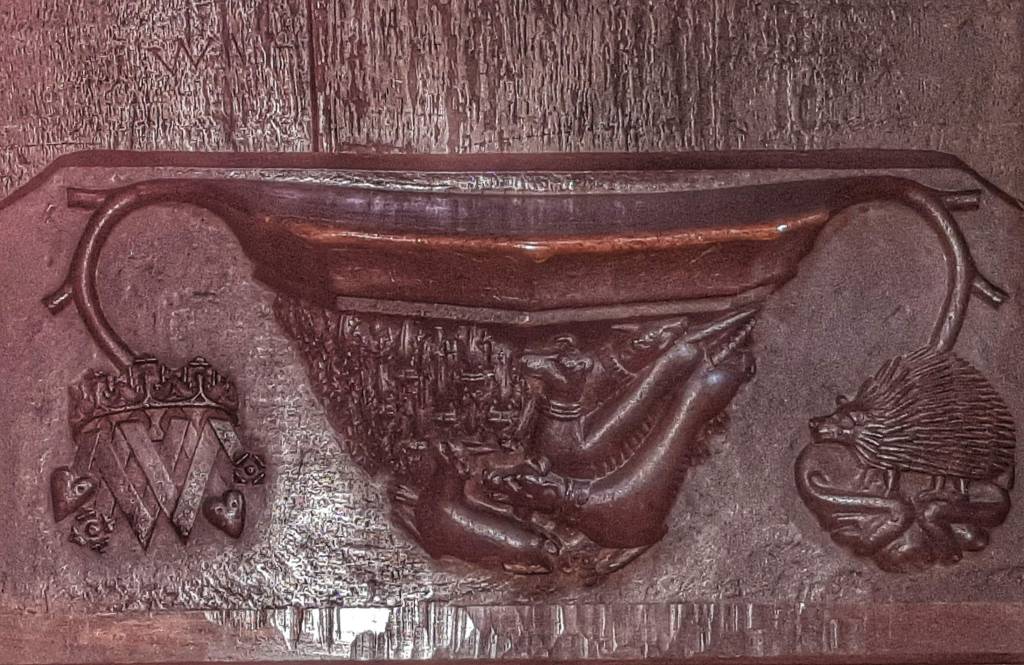

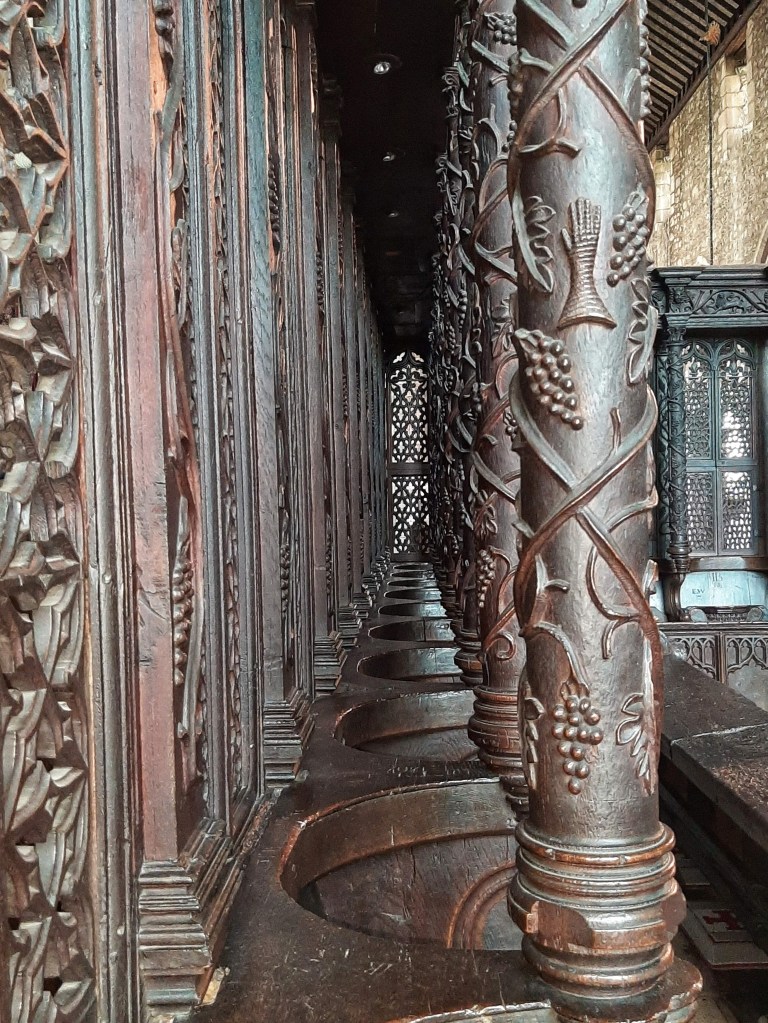


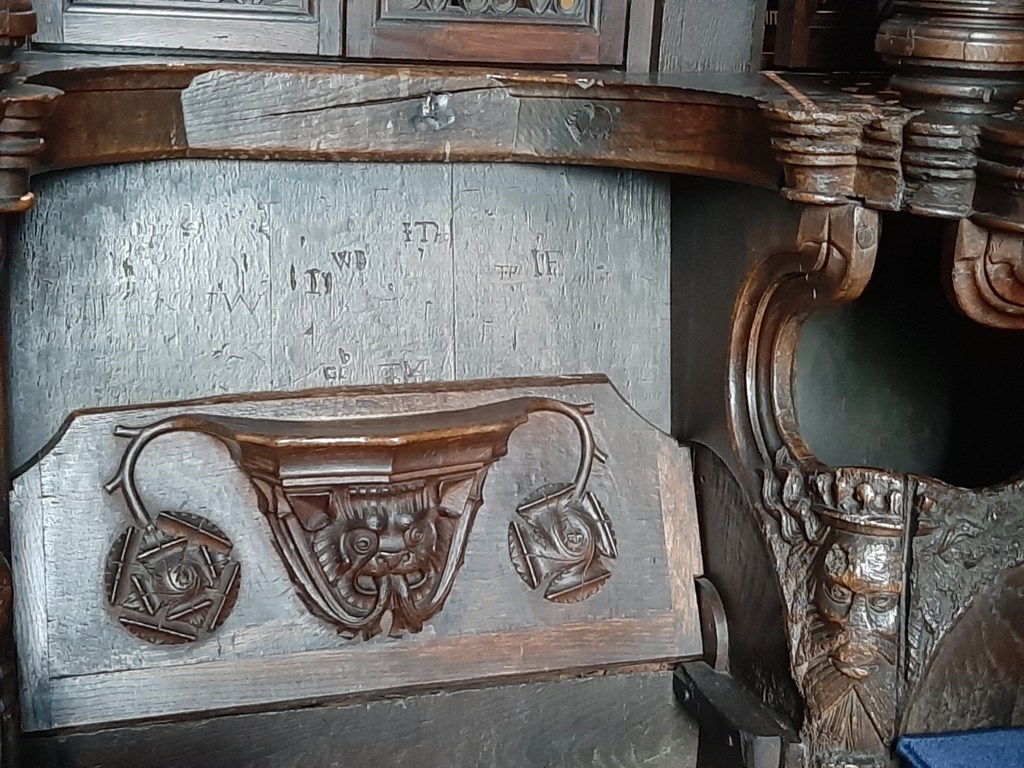

Augustinian Monks
The stories of the Augustinian Monks say that they were an Order active within the community. They assisted the poor, supported agriculture and provided spiritual worship. One story states that the Monks would go out in a storm to help rescue fishermen and those in trouble at sea. They would risk their own lives rescuing others. There have been sightings from around the Bay area of the ghostly figures still to this day. Of hooded figures wearing dark robes spotted on misty coast roads, walking inland through the disorientated weather from stormy seas.
The final story is one of martyrdom. The loss of life is such a horrific way at the dissolution of monasteries. Their story ends at Gallows Hill, in Lancaster as part of the Pilgrimage of Grace.
History of this land and the Priory.
In 674 the land is bequeathed to St. Cuthbert by King Egfrith of Northumbria. First church established and dedicated to St. Michael.
By 1189 the finished Cartmel Priory is founded by William Marshal. A known Knight’s Templar who is buried at the Temple Church London (1219)
Throughout the 13 and 14 hundreds there are additional building works and renovations due to raids and ruin. Henry VIII dissolves the monasteries. The Priory monks are expelled and the King’s commissioners remove all assets, even stripping the roof lead. Villagers petition the King to spare the church. The monks and 10 laymen are hung, drawn and quartered at Lancaster for treason. For the next 2 hundred years the Priory is restored bit by bit by the village, in the 1600s Cromwell’s men do further damage after the village is steeped in poverty and famine, but they somehow keep up the restorations as they view this Priory as their church their holy ground. By the 1800s the Priory is in need of extensive restoration and work is done through out this period to restore major works that have brought this Priory into the 21st century.
The Greatest Knight
William Marshal was a famous character in medieval Britain. One of the wealthiest and most powerful owning estates throughout the country and acting as Regent, King’s negotiator and influential to the writing of the Magna Carter. His name of the time, (in French) is Guillaume le Maréchal.
Around the age of twelve, when his father’s career was faltering, he was sent to the Château de Tancarville in Normandy to be brought up in the household of William de Tancarville, a great magnate and cousin of young William’s mother. Here he began his training as a knight. This would have included biblical stories, Latin prayers, and exposure to French romance literature to confer precepts of chivalry upon the future knight. In 1166, he was knighted on campaign in Upper Normandy. In 1168 he served in the household of his mother’s brother, Patrick, Earl of Salisbury. Later that year Patrick was escorting Queen Eleanor on a journey near the boundary of her province of Aquitaine and Marshal was part of the escort. They were ambushed by Guy de Lusignan who was trying to capture Queen Eleanor, Patrick was killed but Queen Eleanor escaped. He would remain a member of Queen Eleanor’s household for the next two years, taking part in tournaments and increasing his reputation as a chivalrous knight.
In 1182 he vowed to take up the cross and undertake a crusade to the Holy Land, and after receiving Henry II’s blessing. Marshal left for Jerusalem in late 1183, nothing is known of his activities during the two years he was gone.
1186 William rejoined the court of King Henry II, the King gave William the large royal estate of Cartmel in Cumbria.
He was promised the hand in marriage and estates of Isabel de Clare (c.1172–1220), Marshal married the 17-year-old daughter of Richard de Clare (Strongbow). Her father had been Earl of Pembroke, and Marshal acquired large estates and claims in England, Wales, Normandy and Ireland. The marriage transformed the landless knight from a minor family into one of the richest men in the kingdom, a sign of his power and prestige at court.
William was included in the council of regency which King Richard appointed on his departure for the Third Crusade in 1190. Marshal served the king in his wars in Normandy against Philip II. On Richard’s death-bed, the king designated Marshal as custodian of Rouen and of the royal treasure during the interregnum. On 11 November 1216 at Gloucester, upon the death of King John, William Marshal was named by the king’s council to serve as protector of the nine-year-old King Henry III, and regent of the kingdom.
Fulfilling the vow he had made while on crusade, he was invested into the order of the Knights Templar on his deathbed. He died peacefully on 14 May 1219 at Caversham. He was buried in the Temple Church in London, where his tomb can still be seen. You find more information on William Marshall on Wikipedia.
 Medicinalmeadows